
Housing Division
New YIMBY Laws Promote Rapid Residential Development in San Francisco and Other California Cities — And an Angry Political Backlash

Lori Brooke is angry. In fact, anger seems to be the main motivator and defining trait for this longtime San Francisco neighborhood activist in her current campaign for the city’s Board of Supervisors.
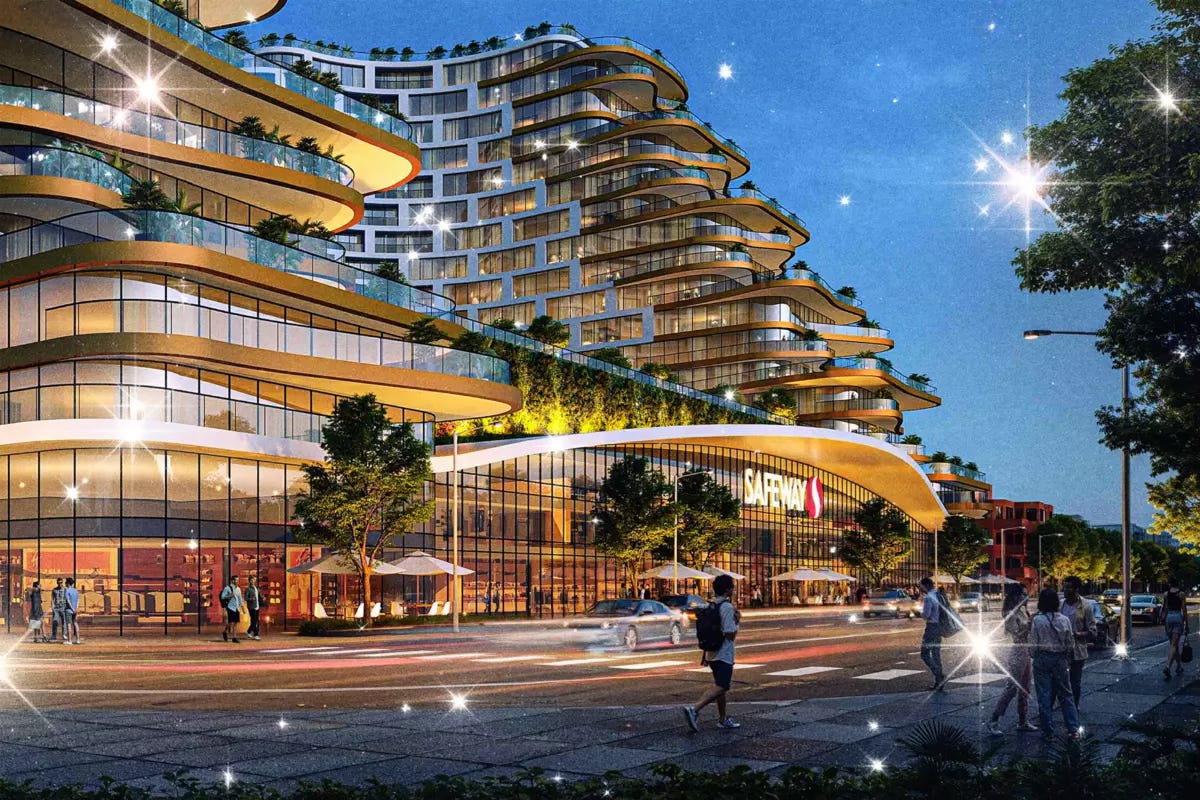
Brooke is mad at California Senator Scott Wiener and the state laws he enacted to accelerate housing development. She’s mad at Mayor Daniel Lurie and the supervisors who passed his Family Zoning Plan to comply with those state mandates. And she’s really mad about a proposal to redevelop the Marina Safeway in her neighborhood with 790 homes in 25-story towers.
But what seems to anger Brooke more than anything is what’s at the core of these other frustrations: the loss of local control over how San Francisco grows. After all, Brooke has been president of the Cow Hollow Association for almost 20 years. And she united similar neighborhood groups around town into Neighborhoods United SF to fight projects they oppose.
During a recent campaign event, Brooke vented intense frustrations with Wiener and the Family Zoning Plan that his policies spawned. That plan could create 36,200 new housing units by increasing housing density and height along transit corridors on the west and north sides of San Francisco. It bolsters existing housing plans intended to help San Francisco meet its state mandate of building 82,000 new housing units by 2031.
Brooke casts Wiener as a one-man wrecking ball aimed at the city she loves, deviously plotting day and night. “He plays four-dimensional chess and only seems to sleep for three hours a night,” Brooke said of Wiener, intending it as a put-down but echoing a work ethic Wiener embodies as a point of pride.
Asked about Brooke’s comment and her anger toward him, Wiener told me, “I’ve known Lori for a long time and she used to be normal,” a maddening response to someone angry about the new normal of diminished local control over neighborhood development.
This clash over the future and who will define it is the animating political force in San Francisco and other California cities these days. It’s not just about housing, but a range of related issues: democracy, the concentration of wealth and power, neoliberalism, transportation policy, environmental planning, and the future of America and its biggest cities.
Local Control: Brooke finds herself powerless to stop changes she thinks will destroy the San Francisco she loves. For decades, neighborhood groups wielded tremendous power to shape, stall, or stop development projects using San Francisco’s planning review processes and California Environmental Quality Act lawsuits.
That dynamic contributed to San Francisco failing to keep up with housing demand as the cost of housing skyrocketed. But starting about a decade ago, local control that critics derided as NIMBY (Not In My Backyard) was countered by a YIMBY movement, a pro-growth push to address what it deems our “housing crisis.”
So Wiener and other YIMBY-backed politicians enacted a series of laws — including Senate Bills 35, 423, 828 and 79 — to streamline approvals for housing projects, give density bumps to projects along public transit lines or lots of affordable housing, and take project approval authority away from cities that haven’t been building enough housing.
In San Francisco, most housing projects now face only “ministerial approval,” in which planners certify projects meet local and state codes — with no chance for discretionary reviews, added conditions or raucous public hearings — and must approve projects of up to 150 homes within 90 days and larger ones in 180 days.
YIMBY groups and politicians justify those edicts with high-minded environmental and social justice appeals, saying they’re about creating transit-oriented development and homes for working class people in the cities where they work, thus addressing climate change, housing segregation, and automobile dependency.
But progressive-left groups call the YIMBY movement a neoliberal ruse to build more lucrative market-rate housing, by promising the affordable housing that San Francisco actually needs but largely failing to deliver. They say high construction costs and profit margin demands by developers and investors are bigger barriers to housing construction than NIMBY opposition.
“It’s all just talk. It’s not about zoning, the private housing market is just stuck,” says Quintin Mecke, executive director of San Francisco’s Council of Community Housing Organizations. “Unless you fund affordable housing projects, they just won’t happen.”
San Francisco has built about 15,000 new homes over the last five years, each year fewer than the last, with about a third of those homes affordable to moderate income residents or poorer. That’s a fraction of what the state says we need: more than 13,000 homes each year, about half of those affordable (the city’s housing pipeline reports 3,215 homes under construction and another 4,067 with approved building permits).
Yet to stimulate more development, San Francisco has slashed the inclusionary housing fees its uses to subsidize affordable housing and the development impact fees its uses to pay for roads, parks, and other infrastructure to serve those new residents.
“What you get is dysfunctional density,” my friend Jason Henderson, a geography professor at San Francisco State University who specializes in urban transportation, told me. He criticized the analysis by San Francisco Planning and Urban Research arguing zoning for more affordable housing on the city’s westside will cure its high rate of automobile dependence.
“It’s a flawed argument because there are other factors,” he said, citing longtime political resistance in the Sunset and Richmond districts to light rail, bus rapid transit, and bike lanes that will be needed to avoid traffic gridlock. “You need political courage because you have to take space from cars.”
Yet these days in San Francisco, with its extreme polarization and angry distrust between the YIMBY/moderate and NIMBY/progressive camps and arguments, those sorts of nuanced discussions just aren’t happening. Things have gotten downright tribal.
Tribal Politics: To sense the tenor of the times, take a look at how the SF Standard — an online newsroom funded by billionaire venture capitalist Michael Moritz — recently wrote about the Marina Safeway proposal.
It starts with the loaded headline, “The Marina Safeway May be SF NIMBY’s Last Stand,” and continues that framing into its lede: “Ten years ago, it would have been unthinkable: An apartment tower with hundreds of units rising above Fort Mason. The wealthy homeowners of the Marina would surely have rallied together to save their bay views with little more than angry emails and a few speeches at public hearings. Today, there’s not much they can do.”
It then details how Wiener’s YIMBY laws took away local control over approving the project and Brooke’s petition drive hoping to stop the project, which is so out of scale for the low-rise neighborhood that even pro-YIMBY politicians Mayor Lurie and the district’s Supervisor Stephen Sherrill (who Brooke is challenging) oppose it.
But the progressive advocates who would normally join neighborhood activists like Brooke in vigorously fighting such a massive housing project so close to the bay’s edge instead seem to delight in the frustrations of wealthy Marina residents.
“Any time the SF mods are stumbling to keep their fractious coalition of law-and-order NIMBYs and ideologically fanatical YIMBYs together, that’s gonna be a LOL from me,” tenant organizer Shanti Singh said. Peter Stevens of affordable housing developer TODCO Group, said, “Let them build rich housing in rich areas.”
Dean Preston, a progressive tenant advocate ousted from the San Francisco Board of Supervisors in 2024 after being targeted by YIMBY supporters, joined the critics’ chorus. But he also told the Standard that opposition from city leaders could still block the project.
As an example, Preston cited Parcel K in Hayes Valley, a city-owned property long intended for 100% affordable family housing, which has long been stalled by the Mayor’s Office of Housing and Community Development as some Hayes Valley civic leaders advocate for it to remain de facto open space.
“There literally were no barriers to moving forward there, except that some well-connected, well-off neighbors who were close to the mayor just torpedoed it,” Preston said, adding that the same thing could happen to the Marina Safeway project.
I asked Preston what power Mayor Lurie and others still have to affect projects they don’t like, and he described it more as a soft power: “Most developers are sophisticated enough that they want good relationships with those in power.”
New Era: There’s no love lost between the YIMBY and NIMBY factions these days, each side criticizing the other in deeply personal terms. Matthew Lewis, the director of communications with California YIMBY, accused big city neighborhood groups of being racist and classist in blocking working class housing.
“San Francisco was openly saying we don’t want these people living here,” Lewis said, citing the exodus of working class people of color to faraway suburbs in recent decades. “San Francisco has been a horrific displacement and gentrification engine.”
Asked whether the embrace of YIMBY policies is succeeding in creating more working class housing, he said, “What’s working is a dramatic shift in our politics.” But he compared it to the Civil Rights Movement, saying it will still take more time and effort to change realities on the ground and overcome opposition in cities.
Lewis actually agrees with Mecke and other progressives that building housing affordable to low-income residents requires government subsidies, but Lewis doesn’t think developers should pay for it with inclusionary housing fees and requirements, which raises housing construction costs.
“The city should spread the costs of affordable housing to all residents instead of just new residents,” Lewis said. “The city should tax everyone to provide the affordable housing it needs.”
But Mecke says the billionaire-backed YIMBY movement ignores the massive concentration of wealth and power in recent years, arguing for greater wealth taxes to fund the overwhelming need for truly affordable housing, voicing support for Washington’s millionaire’s tax and California’s proposed billionaires tax.
Mecke decried the YIMBY laws and loss of local control over development, but said said it was a wake-up call to push back: “It’s a big organizing moment, for sure.”
Despite ongoing political struggles, Lewis expressed confidence that YIMBY laws and the Family Zoning Plan will result in significant construction of middle-income housing before too long, saying “the pent up demand for homes in San Francisco is astronomical.”
At her recent campaign party, Brooke was asked several times what she and her allies can do to stop the market-rate housing projects they oppose. The first time, she vented her anger at Wiener, Sherrill and other YIMBY-backed politicians. Asked again, she hoped various lawsuits challenging YIMBY laws at the state and local levels might succeed.
Finally, when I asked her what she’ll actually do as supervisor once the Marina Safeway and other projects she opposes get the ministerial local sign-offs they need to break ground. At that point, her anger seemed to morph into grim acceptance of her powerlessness, even as she vowed, “I’ll never stop fighting.”